


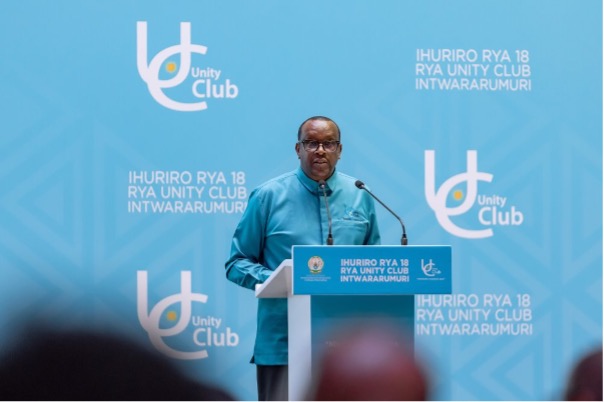
The article published by IGIHE under the headline “Genocide Ideology: Belgium, Guardian of Genetic Heritage” levels extremely serious accusations against Belgium and against Rwandans living in exile, suggesting that the country maintains a supposed “genetic lineage” with the ideology that led to the 1994 Genocide against the Tutsi.
Such terminology, lacking any scientific, legal or historiographical basis, echoes the discredited language of 19th-century racial theories and cannot serve as a credible foundation for contemporary analysis.
Because of the gravity of these claims, a factual legal, historical and political clarification is necessary.
Legal Framework
Belgium has long maintained a clear and stringent legal framework for prosecuting international crimes and combating genocide denial.
Since 1995, Belgium has been a pioneer in exercising extraterritorial jurisdiction, resulting in landmark genocide trials in 2001, 2005, 2019, and most recently in 2024, with the opening of a new case for genocide. These proceedings demonstrate that Belgium has consistently acted whenever serious evidence is established.
In addition, the Law of 23 March 1995, amended in 2019 with unanimous support from democratic parties, explicitly criminalizes the denial, gross minimization or justification of the Genocide against the Tutsi. Belgium is one of the few European states to include this offence in its national legislation.
To claim, therefore, that Belgium has become a “safe haven” for genocide denial disregards this legal reality, especially since no complaint has ever been filed under the 2019 law. If offences were committed, they would fall under judicial authority, as the law stipulates.
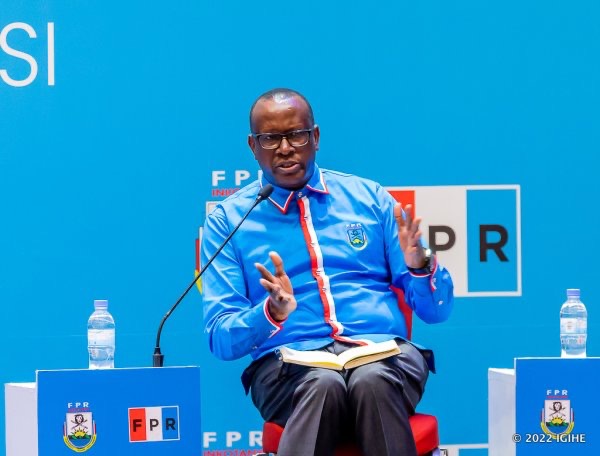
Historical Context
It is well documented that German and later Belgian colonial administration contributed to rigidifying social and ethnic categories in Rwanda, influenced by the racial anthropology of the time. This is recognized in academic research and in Belgian parliamentary debates.
However, the development of genocidal ideology between 1959 and 1994 resulted from political, social and ideological dynamics internal to Rwanda: power struggles, ethnic propaganda, radicalization and state-led mobilization.
No reputable historian establishes a “genetic” or automatic continuity between colonial structures and the decisions made by Rwandan political actors decades later. Recognizing colonial errors does not erase the agency and responsibility of those who engineered and executed genocide.
Political Considerations
The fight against genocide denial must never become a tool of political influence. The suggestion that Belgium should sanction or restrict associations critical of the Rwandan government ignores two fundamental principles:
Freedom of expression and association, protected by the Belgian Constitution;
European and Belgian case law, which sets strict conditions on any limitations to these freedoms.
Criticizing a government, any government, does not constitute a criminal offence in a democratic state.
The IGIHE article appears in a context where Belgium has repeatedly condemned Rwanda’s role in the conflict in eastern DRC. The accusations therefore function as a form of diplomatic pressure, attempting to penalize Belgium’s political stance by invoking genocide-related terminology.
The article specifically labels certain organizations, including Jambo ASBL, as “denialist” without presenting any statement, publication or act that would fall under the 2019 law. If violations existed, they would require judicial action, not political rhetoric.
Equating entire groups of Belgian residents with criminal conduct solely on the basis of political opinion constitutes defamation, which is punishable under Belgian law.
Conclusion
The memory of the genocide demands accuracy, justice and dignity. But these principles must not be misused to silence political criticism or to impose a single interpretation of current events.
Belgium’s position is clear: if an offence is committed, it is for the judiciary, and only the judiciary, to determine it.
Everything beyond that is simply defamation.