

Since 2025, thousands of people have been transferred to Rwanda from areas of eastern DRC controlled by the RDF and AFC/M23. Presented by UNHCR and MONUSCO as voluntary repatriations, these operations raise a fundamental question: did the Rwandan refugees concerned genuinely have the option to refuse?
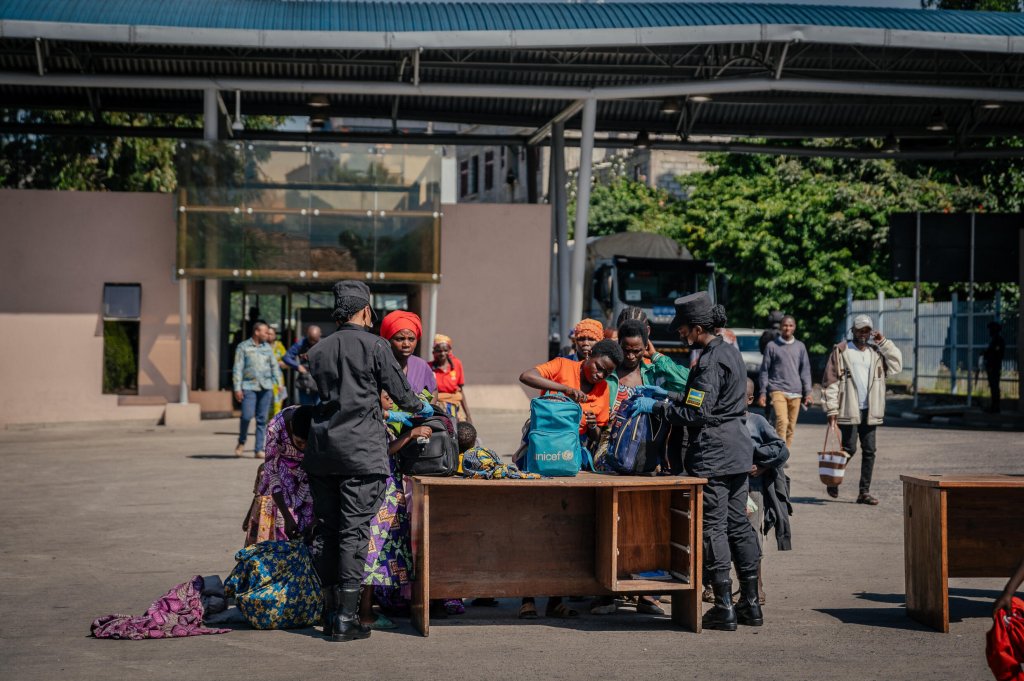
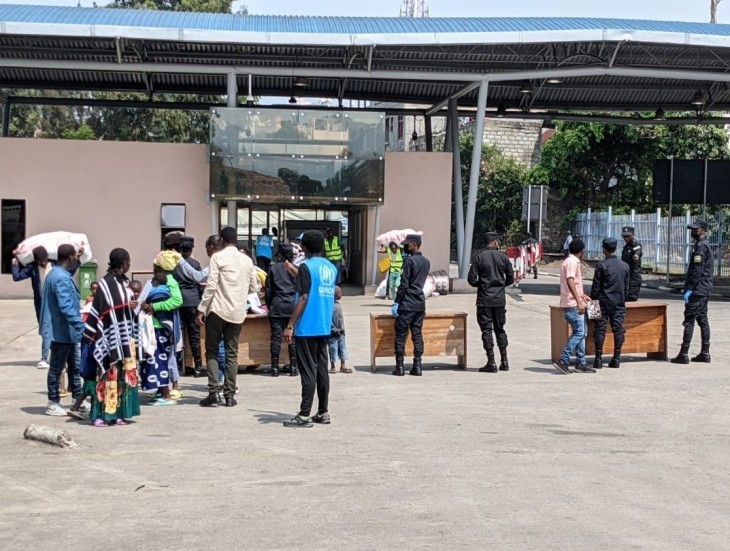
On September 8, 2026, MONUSCO announced that it had repatriated 120 people to Rwanda, describing them as FDLR members and their dependants. Two days later, UNHCR Rwanda welcomed the “voluntary” return of 366 Rwandans from Goma, Bukavu and Kamanyola.
According to data provided by UNHCR, 3,752 Rwandan refugees have been repatriated from the DRC to Rwanda since the beginning of 2026.
These announcements present the image of an orderly humanitarian process. They do not, however, explain who initially identified and assembled these Rwandan refugees, under what conditions they were brought to UNHCR and MONUSCO facilities, or at what point their consent was obtained.
The question is particularly sensitive because these operations are taking place in territories occupied by the AFC/M23 with the direct involvement of the Rwanda Defence Force. The latest findings of the United Nations Group of Experts do not describe mere cooperation between two autonomous forces. They refer to Rwanda’s “command and control” over the AFC/M23 and document both joint operations and the direct deployment of thousands of Rwandan troops on Congolese territory.
Rwandan refugees are therefore finding themselves, in their country of asylum, in territories controlled by the RDF or by a movement operating under Rwanda’s decisive influence.
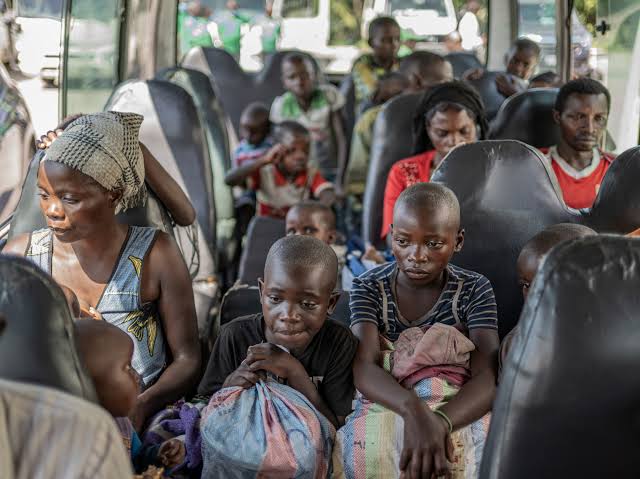
One documented incident in 2025 illustrates the concerns surrounding some of these repatriations. According to a 2025 report by the United Nations Group of Experts, on May 12, 2025, the AFC/M23 rounded up more than 2,000 civilians from collective shelters around Goma and Sake. Most of them were Hutu civilians who had previously been forcibly displaced from villages near Virunga National Park. They were then taken under duress to the UNHCR-managed refugee transit centre in Goma.
Between May 17 and 22, 2025, 1,798 people were transferred to Rwanda. The report states that the conditions required for a voluntary return were not in place: most of those concerned were unable to confirm or challenge the nationality assigned to them or express their opposition to the transfer. Screening took place under armed supervision and with the involvement of the AFC/M23. At least 72 Congolese citizens transferred to Rwanda were subsequently returned to the DRC after proving their Congolese nationality.
The report’s annex states that these transfers were coordinated and controlled by AFC/M23 elements. It also notes that Rwanda’s involvement raised serious concerns because of Kigali’s documented influence, control and direction over the AFC/M23, as well as the continued presence of RDF personnel on Congolese territory.
This incident does not establish that all repatriations announced in 2026 took place under the same conditions. It does, however, demonstrate that the designation “voluntary return” must rest on an independent assessment of the entire process, rather than solely on the involvement of an international institution at its final stage.
Human Rights Watch has also documented arrests, detentions and forcible transfers of Hutu civilians to Rwanda.
A testimony obtained directly by Jambonews offers an insight into what such operations can entail. The witness’s identity is being withheld to protect her safety and that of her family.
She says that her sister was arrested in Bukavu with two of her children during a checkpoint inspection conducted by AFC/M23 intelligence agents. For several weeks, the family did not know where they were. She eventually learned that her sister had been placed in a convoy transferred to Rwanda.
“Two months ago, my sister was arrested with two of her children. We had no news until we learned that she was among those sent to Rwanda in a convoy. She left everything behind, including her other child, who was staying with me. There was nothing voluntary about it.”
The witness describes an atmosphere in which Rwandan refugees try to conceal their identity for fear of being denounced, arrested and transferred:
“We live in fear. As soon as someone is suspected of being a Rwandan refugee, they risk being arrested and deported to Rwanda, leaving everything behind. Denunciations and false accusations are multiplying. The atmosphere is terrible: we feel hunted and unsafe everywhere.”
The woman has lived in the DRC for more than 30 years. Her husband is Congolese, and their children have never known any other country. She says that her family has now decided to flee to Burundi rather than risk being transferred to Rwanda.
“We do not want to return to Rwanda. Our only memories of that country are of death and devastation. When we fled, my sister was four and I was eight. Our parents had just been killed. Life may be difficult here, but we do not believe it could be better in a country where we suffered so much, especially when those who caused our suffering are still there and remain just as powerful.”
This account cannot, on its own, establish the circumstances of every convoy. It does, however, illustrate the constraints that may precede the handover of Rwandan refugees to international institutions.
This issue has notably been raised by All For Rwanda, a movement committed to protecting Rwandan refugees and seeking a political solution that would allow them to return freely, safely and with dignity. Since the resumption, in late 2021, of the war waged by the M23 with RDF involvement, the organisation has carried out humanitarian activities, relayed alerts from the ground and contributed to dialogue initiatives.
All For Rwanda recently sent two separate letters to UNHCR and MONUSCO regarding the repatriations announced in September 2026. Jambonews obtained copies of these letters, which confront the two institutions with a fundamental contradiction:
“The forces of the country of origin directly control, or control through their proxy, the territory where the Rwandan refugees are located; they participate in searching for or assembling them; and those same Rwandan refugees are then transferred to that country with the involvement of international institutions at the final stage. Under these circumstances, Rwanda cannot participate in creating the coercive conditions, influence the chain leading to the transfer, and subsequently benefit from its designation as a ‘voluntary return.’”
The letters summarise the problem in one sentence: “The involvement of UNHCR or MONUSCO at the final stage of a transfer cannot erase the coercion applied beforehand.”
All For Rwanda is asking UNHCR and MONUSCO to disclose who identified the Rwandan refugees, who assembled them and brought them to their facilities, whether RDF or AFC/M23 agents were involved in the process, and whether every individual was interviewed privately and separately, away from any armed presence. The organisation is also asking how the refugees’ genuine ability to refuse the transfer was verified.
These questions arise against a background of longstanding mistrust. For many Rwandan refugees, distrust of UNHCR dates back to the destruction of the camps in the Kivu provinces in 1996 and the feeling that they were abandoned during the massacres and pursuits documented, among other sources, by the United Nations Mapping Report.
UNHCR’s recommendation to invoke the cessation clause for Rwandans who fled before the end of 1998 has deepened this insecurity. Despite the theoretical availability of exemption procedures, many Rwandan refugees live without clearly established legal status, making it harder for them to access asylum procedures, identity documents, education and freedom of movement.
MONUSCO also carries a significant historical burden in the eyes of these communities. Its predecessor, MONUC, supported FARDC operations conducted in the aftermath of the joint Rwandan-Congolese Umoja Wetu offensive in 2009, in a context marked by civilian casualties and large-scale displacement. In late 2019, thousands of Rwandan refugees in Kalehe were attacked, dispersed or captured. Their representatives still accuse MONUSCO of failing to protect those who had sought refuge near one of its positions.
Another Rwandan refugee interviewed by Jambonews described this collapse of trust in particularly severe terms:
“For us, UNHCR, MONUSCO, the AFC/M23, the RDF and the RPF are all the same. They have worked together for a long time to defend interests that are opposed to us, the Rwandan refugees. They want to make us understand that we have no rights to claim and that our only option is to return to Rwanda and sing the regime’s praises.”
He more directly accuses the Rwandan authorities of using the AFC/M23 against Rwandan refugees and criticises international institutions for contributing to the legitimisation of these operations:
“The RPF operates under the cover of the AFC/M23 to crush us, either by massacring us or by deporting us. All of this is then covered by UNHCR, which gives it a humanitarian stamp, while MONUSCO collectively treats Rwandan refugee men as combatants, making these operations easier. The regime in power in Rwanda has never had a better partner than UNHCR. Here, we feel that we cannot trust anyone.”
These statements reflect the witness’s perception and do not, by themselves, establish coordination among all the institutions named. They nevertheless illustrate the depth of the mistrust that UNHCR and MONUSCO face among a large proportion of Rwandan refugees.
According to the latest detailed UNHCR statistics available, the DRC hosted 196,225 Rwandan refugees and asylum-seekers as of June 30, 2026. This figure represents the population recorded through the statistical mechanisms of UNHCR and the Congolese National Commission for Refugees. It does not, by itself, establish the total number of Rwandan refugees present in the DRC, particularly among unregistered populations.
All For Rwanda estimates that the actual population could be close to 500,000, with many Rwandan refugees living in hiding, without documents or under assumed identities, for fear of arrest, being labelled as FDLR members or being returned to Rwanda.
Even the official figure makes Rwandan refugees one of the two largest refugee communities in the DRC. A few convoys involving several hundred people cannot resolve a situation of exile that is both longstanding and massive.
These repatriations could also undermine the protocol recently signed between the DRC and the FDLR, which All For Rwanda states in its letters that it has supported and continues to support. Transfers organised in parallel from territories where Congolese institutions are unable to exercise their full authority could undermine the trust required to implement this protocol and the peace commitments arising from the Washington process.
The controversy is not about the principle of Rwandan refugees returning home, but about the conditions required for such returns to be considered voluntary. A credible process requires independent information, a genuine ability to refuse, private individual interviews conducted away from any armed presence, post-return monitoring, and the participation of Rwandan refugee representatives in discussions that determine their future.
In its letters, All For Rwanda advocates a solution that goes beyond isolated repatriation operations:
“The solution advocated by All For Rwanda is a broader, prepared and sustainable voluntary return, accompanied by credible security, legal and political guarantees. Rwandan refugees must be able to live in Rwanda without fear of persecution, arbitrary detention, disappearance or automatic association with an armed organisation. This also requires an open political space in which Rwandan refugees, civil society and peaceful organisations emerging from exile can participate freely in national life.”
In July 2025, following a tripartite meeting between the DRC, Rwanda and UNHCR, All For Rwanda had already criticised the exclusion of Rwandan refugees from decisions being made in their name: “Rwandan refugees are treated as a silent diplomatic variable. People talk about them, but never with them.”
In the absence of independent safeguards regarding identification, assembly and consent, the designation “voluntary returns” remains insufficiently substantiated. A process that begins with fear, armed surveillance or coercion does not become voluntary simply because UNHCR or MONUSCO becomes involved at its final stage.
Aimable Hakuzwimana