

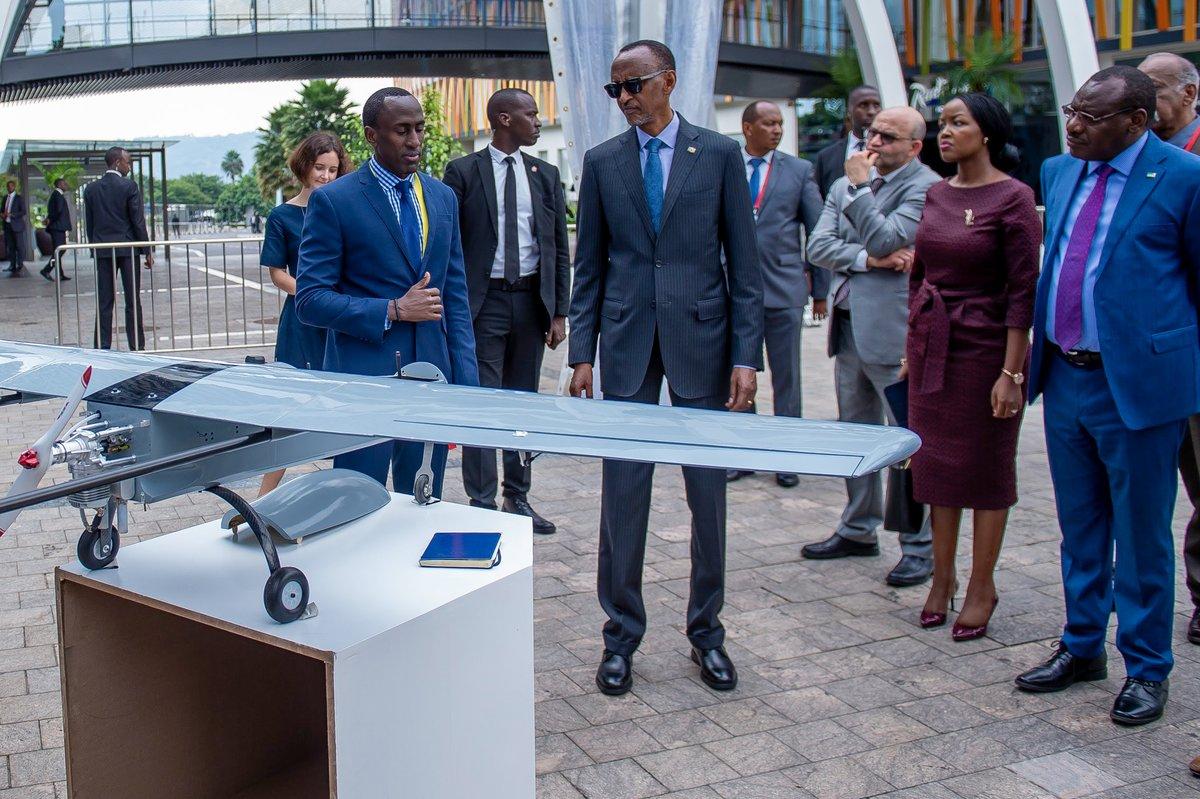
Historically lacking a fighter aircraft fleet, Rwanda is developing a new approach to aerial warfare built around the combined use of armed drones, small kamikaze drones and electronic warfare capabilities. Already deployed on battlefields in the Democratic Republic of Congo (DRC), this approach relies on systems with different costs and functions working together, as well as the ability to replace them rapidly. At the same time, Kigali is drawing on foreign partners to build a technological and industrial ecosystem capable of strengthening its military autonomy. This expansion raises serious concerns for peace and stability in Africa’s Great Lakes region, while also calling into question the role of Western powers in Rwanda’s strategic transformation.
Turning an Air Power Weakness into a Driver of Transformation
For years, air power has been a structural weakness of the Rwanda Defence Force (RDF). According to publicly available military inventories, the Rwanda Air Force operates neither fighter jets nor fixed-wing attack aircraft. Its manned fleet consists mainly of transport and support helicopters, including armed Mi-24/Mi-35 helicopters, and a handful of light aircraft. Against a neighbour equipped with combat aircraft, Rwanda would have been unable to contest control of the skies.
Drones have not eliminated this vulnerability: a Bayraktar cannot replace a fighter jet. But they have given Rwanda the ability to conduct persistent surveillance and strike targets remotely without building a conventional fighter fleet. This is not simply a matter of acquiring new equipment. It represents a fundamental shift in the relationship between cost, technology and military power.
Eastern Congo: The Emergence of an Integrated Drone Strategy
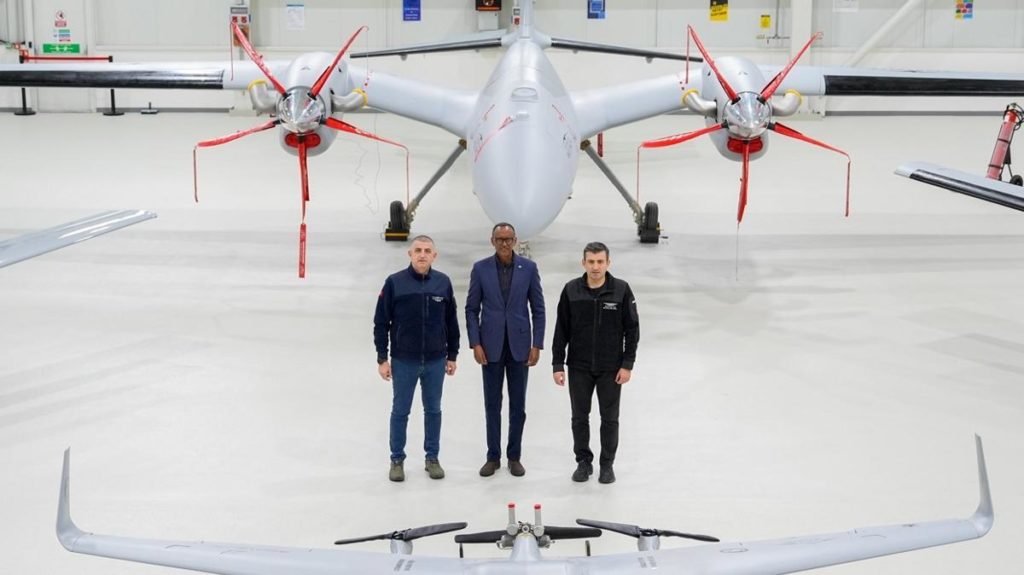
Turkish-made Bayraktar TB2 drones marked the first major breakthrough. In its July 2025 report, the United Nations Group of Experts documented their presence at Kamembe and attributed strikes inside the DRC to the RDF, including a 26 January 2025 attack on Congo Protection vehicles in Kibati.
Another category gained importance from December 2025 onwards: kamikaze drones, also known as loitering munitions. According to the UN Group of Experts’ report published in June 2026, the RDF deployed more than 8,000 troops, kamikaze and first-person-view (FPV) drones, electronic jamming equipment and heavy artillery during the offensive against Uvira.
This combination accompanied a rapid advance: Burundian troops withdrew, major Congolese military bases fell, and Uvira was captured on 10 December. According to several sources, the deployment of FPV drones played a decisive role in the offensive, disrupting Congolese and Burundian positions and supply lines and accelerating their withdrawal within days.
In early 2026, the AFC/M23 claimed responsibility for three waves of attacks against Kisangani Airport. The UN report subsequently documented at least nine drone attacks by the RDF and AFC/M23 in the South Kivu Highlands between 1 and 14 April. At least two involved TB2 drones, while the others were carried out using kamikaze drones.
This combination points to a three-tiered doctrine: the TB2 provides persistent surveillance and precision strikes; fixed-wing kamikaze drones extend the threat deep into enemy territory, as far as Kisangani; and FPV drones support ground assaults. According to UN experts, these strikes are intended to weaken enemy defences and command structures before or during ground operations.
Analysis of recovered wreckage revealed components from various countries and evidence of small-batch production. Neither the manufacturer nor production in Rwanda has been established.
A War of Systems, Not Just Aircraft
The United Nations has also documented GPS jamming and spoofing by the RDF, as well as the presence of Polish-made counter-drone equipment. As a fourth pillar of this strategy, electronic warfare challenges the ability of enemy drones to operate in the airspace. It also disrupts civilian and humanitarian flights, extending the threat well beyond the battlefield.
These developments reflect lessons from the Russia–Ukraine war: the ability to replace and adapt equipment rapidly matters as much as its initial performance. Russia moved from importing Iranian Shahed drones to producing them domestically, offering a possible trajectory for Rwanda.
Rwandan military officials have openly acknowledged the importance of this transformation. Speaking in Kigali in August 2026, Colonel Patrick Nyirishema, head of research and development within the RDF, called for the development of local talent, including outside defence institutions, given the civilian applications of these technologies. He also stressed the need to build systems adapted to local conditions.
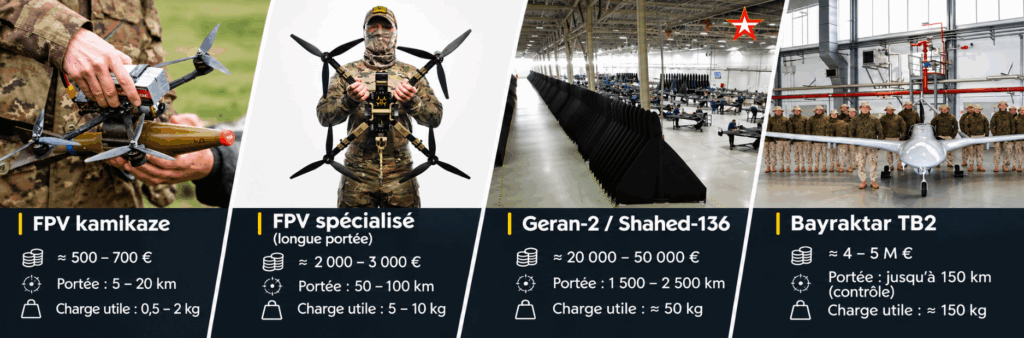
Rwanda has understood another major lesson: military power is no longer measured solely by the price or sophistication of military equipment. With a budget of €5 million, an army could theoretically produce several thousand small FPV kamikaze drones, costing approximately €500 to €3,000 each depending on their equipment, or around 100 long-range kamikaze drones comparable to the Iranian Shahed-136, manufactured in Russia under the name Geran-2 at an estimated cost of €50,000 per unit.
These systems do not perform the same missions as conventional armed drones such as the Chinese CH-4 or Turkish Bayraktar TB2, whose complete systems cost several million euros. Yet their numbers, relatively low cost and rapid replacement are transforming the economics of warfare, as the conflict in Ukraine demonstrates.
For Kigali, developing domestic production could reduce dependence on foreign suppliers and strengthen strategic autonomy, even if certain components continue to be imported.
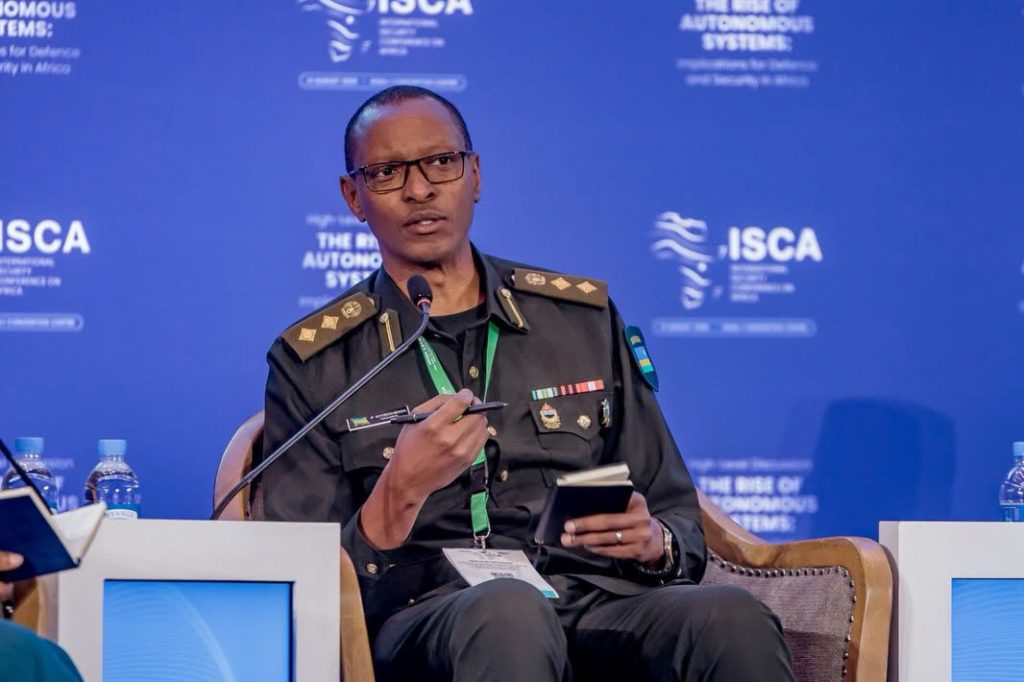
“For centuries, military power was determined by who had more soldiers… But we’ve entered an era where machines can see. Machines can analyse. Machines can make decisions. And machines can act with diminishing human intervention.”
Turkey: A Founding Partner, but Not Necessarily an Exclusive One
Turkey played a central role in Rwanda’s entry into armed drone warfare through the TB2. Following a defence industry agreement in 2015 and a memorandum in January 2025, Kigali ratified a military cooperation agreement in late 2025 providing for the manufacture of weapons and drones. The extent to which its industrial provisions have actually been implemented remains unknown.
Nevertheless, Ankara cannot be regarded as Rwanda’s exclusive future industrial partner. Turkey is also deepening its military cooperation with the DRC, following defence industry agreements signed in 2022.
During a meeting between Presidents Recep Tayyip Erdoğan and Félix Tshisekedi on 12 November 2026, the Turkish president discussed defence industry cooperation and reaffirmed his support for Congo’s territorial integrity.
These developments do not establish the precise value of arms deliveries or indicate a definitive shift in Turkish foreign policy. They do, however, demonstrate that Kigali must contend with a supplier that also maintains relations with Kinshasa.
TRL: Industrial Ambitions for 2030
The Czech group TRL adds another dimension to Rwanda’s ambitions. In 2025, its chief executive, Petr Kapoun, said the company had established a small drone assembly workshop in Rwanda and trained ten local specialists. Its goal for 2030 was to establish a factory capable of producing complete drones, including for export.
In October 2026, TRL Defense unveiled an offering combining local drone manufacturing, customer-controlled satellite data and analytical software.
In Kigali, TRL is involving Rwandan engineers in the development of TROLL NG, an Earth observation satellite scheduled for 2027.
The group also works with the Rwanda Institute for Conservation Agriculture (RICA), an agricultural research institution funded by the US-based Howard G. Buffett Foundation, through the RICA-Kumva programme. The initiative uses aerial imagery collected by drones to analyse soils and crops.
Gako, Rwamagana and Huye: Three Distinct Functions
Rwanda is also developing its own capabilities. The Rwanda Military Academy’s 2025 magazine presents ASRAT, an advanced technology research initiative, and iSPY, a prototype small reconnaissance drone. These projects reflect an institutional military interest in domestic drone development.
Within the Ministry of Defence, the Defence Research and Development (DRD) department develops national technologies. The state-owned company REMCO manufactures defence-related components in Kigali, while the Rwandan company Charis designs drones. These capabilities predate the country’s newer international partnerships.
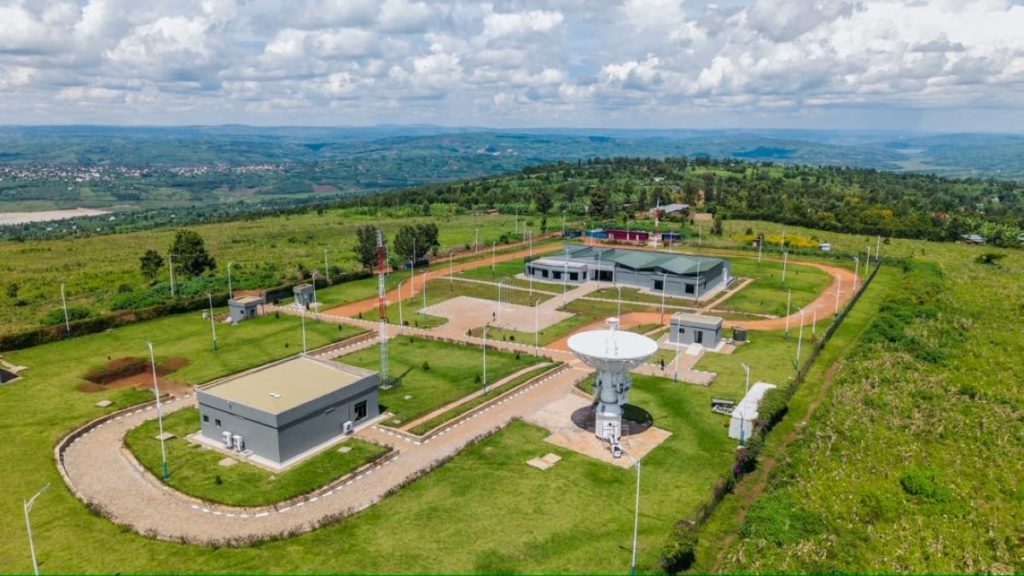
In Mwulire, in Rwamagana District, the Rwanda Space Agency operates a satellite ground station. A second antenna, installed in partnership with the American companies ATLAS Space Operations and York Space Systems, became operational in September 2026.
A month earlier, Planet Labs announced a national programme giving Rwanda access to near-daily satellite imagery.
The 2021 law establishing the Rwanda Space Agency places it under the authority of the presidency and explicitly includes national security among its missions. It is therefore reasonable to consider that these satellite capabilities could also support military intelligence, potentially including target identification in eastern DRC.
In Huye, meanwhile, the Drone Operation Center, a project worth 13.4 billion Rwandan francs led by the Rwanda Information Society Authority (RISA), the public agency responsible for the country’s digital transformation, is intended to include laboratories, manufacturing and maintenance workshops, testing facilities and drone training infrastructure.
The project benefits from funding by the French Development Agency (AFD), as part of a €39.2 million programme that also includes GeoHub, a national platform for collecting and analysing geospatial data.
Among the agricultural applications of these technologies is the use of satellite imagery and artificial intelligence to identify plants suffering from water stress. Yet analysing the differences between natural vegetation and artificial materials is also a technique used by military forces to detect camouflaged equipment.
This overlap illustrates the strategic significance of technologies primarily presented through their civilian applications.
As of November 2026, procurement procedures for construction work on the Huye centre were still under way.
France and the United States: The Civilian Backbone of a Dual-Use Ecosystem
France’s involvement extends beyond the Huye project.
With €700,000 in funding from the French Treasury, three French companies — Innov’ATM, CERBAIR and Atechsys — deployed a system in Rwanda designed to organise and secure civilian drone traffic.
The technology enables authorities to authorise flights, monitor active drones and detect unauthorised aircraft, particularly around Kigali International Airport.
Commissioned in 2024, the system could serve as a model for certain facilities at the future Huye drone centre, according to the French Treasury.
This cooperation developed in the wake of President Emmanuel Macron’s visit to Rwanda in May 2021. Innov’ATM was part of the presidential delegation, alongside Stéphane Lelux, chairman of Tactis, a French digital infrastructure engineering consultancy operating in Rwanda and responsible for the project’s preliminary study.
In 2024, Rwandan officials visited Delair, a manufacturer of civilian and military drones, as well as Thales and Elistair, to discuss manufacturing, prototypes and technology transfer.
The United States is present through Zipline, which has operated medical drone deliveries in Rwanda since 2016. An expansion announced in February 2026 includes a robotics and artificial intelligence testing centre. The associated $150 million US commitment covers several countries, not Rwanda alone.
American involvement also includes philanthropic support for RICA and satellite partnerships with Planet and ATLAS. ATLAS’s parent company, York Space Systems, is a US defence-space manufacturer.
Germany contributes to civilian drone training through its development cooperation agency, GIZ, which is working with RISA on drone and geospatial data training programmes running until the end of 2026.
These programmes develop skills and infrastructure directly transferable to military applications: aeronautical engineering, autonomous systems, maintenance, telecommunications, mapping and image analysis.
Whether used to monitor crops, manage airspace or process satellite imagery, the underlying technologies can also support military reconnaissance, surveillance and intelligence gathering.
Their development is therefore strengthening a national technological base that could eventually support Rwanda’s defence industry.
The UN Group of Experts has recommended that states strengthen end-user verification and monitoring of dual-use technologies supplied to parties to a conflict that violate the arms embargo.
This creates a Western paradox.
Through civilian funding, the United States is helping develop technological capabilities that could be used by a military it has itself sanctioned.
In March and again in October 2026, Washington imposed sanctions on the RDF, Rwanda’s Ministry of Defence and Zigama Credit and Savings Society, a financial institution which, according to the US Treasury, facilitated overseas arms purchases and military training expenditure.
The European Union, meanwhile, provided the RDF with a total of €40 million in non-lethal equipment and air transport support, in 2022 and 2024, for its deployment in Mozambique — expenditure that Kigali did not have to bear itself.
The Challenge Facing the DRC
The Armed Forces of the Democratic Republic of Congo (FARDC) also possess armed drones, including Chinese CH-4s and Turkish TAI ANKAs. Congo is therefore not technologically defenceless.
However, their operation depends on foreign contractors. According to UN experts, Kinshasa recruited former employees of a private military company to operate its CH-4 drones, while another company has been recruiting FPV drone operators in Ukraine, according to Intelligence Online.
The response cannot be limited to acquiring more imported aircraft. It requires lasting domestic capabilities in training, maintenance, data management, airspace protection and military decision-making.
The DRC has emerging initiatives involving small drones, but publicly available information does not yet reveal a national ecosystem as structured as the one Kigali is seeking to build, combining military research, industrial assembly, satellite infrastructure and technology transfer.
This gap in the development of domestic capabilities, rather than the mere possession of armed drones, risks becoming a lasting strategic disadvantage for the DRC.
Uganda, Ethiopia and South Africa are also pursuing industrial initiatives, although at different stages of development.
Burundi has likewise expressed its intention to modernise its military capabilities, particularly in the field of drones. Yet across key areas — research, procurement, production, electronic warfare, surveillance and data processing — it remains significantly behind or has yet to establish structured development programmes.
Within the Great Lakes region, the convergence of these projects and Rwanda’s operational experience give Kigali a head start.
2030: The Real Test Will Be Production
Rwanda now possesses documented armed drone capabilities and a military doctrine tested on Congolese battlefields, despite having no fighter aircraft fleet.
At the same time, it is developing expertise in assembly, research, space-based surveillance and data processing, with the ambition of moving from importing drones to producing its own military systems.
The crucial questions remain: what can Rwanda actually manufacture, in what quantities, and how technologically independent can it become?
Beyond drones, Rwanda is pursuing a broader strategic ambition: building a modern military capable of establishing technological and military superiority over its neighbours.
This represents a deliberate investment choice by the Rwandan government, which prioritises the expansion of military power while essential services for the population — including education, healthcare, social protection and access to safe drinking water — remain neglected.
Neighbouring countries must recognise the significance of this transformation.
For the DRC, already confronting Rwandan forces on its own territory, the challenge is to prevent Kigali’s growing military capabilities from creating a lasting imbalance of power in the region.
Norman Ishimwe Sinamenye